
How It Works
A clear overview of solar thermal hot water technology, system configurations, and how we ensure reliable hot water delivery.
How solar thermal hot water works
Solar thermal systems use collectors to capture solar energy and transfer it to water stored in insulated vessels. Here is a simplified overview of the process.
Solar Collectors Absorb Heat
Flat-plate or evacuated tube collectors are mounted on a suitable roof or structure. These collectors absorb solar radiation and convert it into heat energy, warming a heat-transfer fluid inside the collector.
Heat Transfer to Storage
A pump circulates the heated fluid from the collectors through a heat exchanger inside the storage vessel. The heat exchanger transfers the thermal energy to the stored water without the two fluids mixing.
Hot Water Stored for Use
The heated water is stored in an insulated accumulator vessel or geyser, maintaining temperature until required. Proper insulation minimises standby heat loss.
Distribution to Points of Use
When a tap or shower is opened, hot water flows from the storage vessel through the plumbing system. In commercial setups, a ring main loop ensures hot water is always available at every outlet.
System Monitoring & Control
An electronic controller manages pump operation based on temperature differentials between collectors and storage. Advanced systems include remote monitoring for performance tracking and fault alerts.

Forced circulation vs thermosiphon
There are two primary methods for circulating fluid through a solar thermal system. The best choice depends on your building layout, budget, and hot water requirements.
Forced Circulation
Uses an electric pump to move heat-transfer fluid between the solar collectors and the storage vessel. This allows greater flexibility in system design — the storage tank can be located below or away from the collectors. Forced circulation is the standard for commercial installations and larger domestic systems.
- Tank can be placed anywhere
- Better suited for larger systems
- Requires electrical pump and controller
Thermosiphon
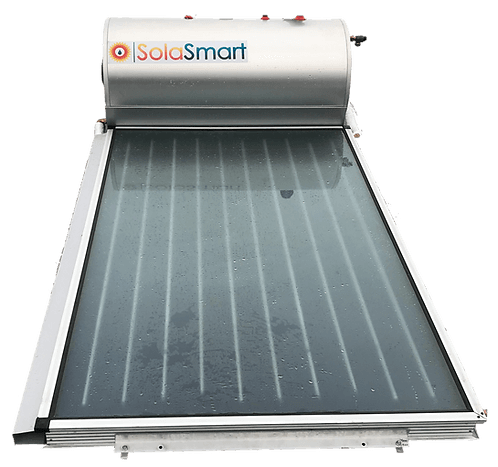
Relies on natural convection — heated fluid rises from the collector into a tank mounted above. This is a simpler, more passive system with no moving parts or pump requirements. Thermosiphon systems are commonly used in smaller domestic installations where the tank can be positioned directly above the collectors.
- No pump or electricity required
- Lower installation cost
- Tank must be above collectors
Backup Boosting
Solar thermal systems perform best in direct sunlight, but South Africa does experience overcast days and higher-demand periods. To ensure a reliable supply of hot water at all times, backup boosting can be integrated into the system.
Common methods include an electrical element installed inside the storage vessel, which activates automatically when water temperature drops below a set threshold. In larger systems, a heat pump can serve as the backup, providing efficient heating even on cloudy days. The backup system works seamlessly with the solar primary, activating only when needed to top up water temperature.
Storage & Ring Main Integration
In commercial buildings, hot water needs to be available instantly at every tap and shower. A ring main system circulates hot water in a continuous loop throughout the building, so there is no delay when a fixture is opened.
Heat accumulator vessels act as the central reservoir, absorbing heat from collectors or heat pumps and distributing it via the ring main. Proper sizing of the storage vessel and ring main ensures the system can handle peak demand — such as morning shower periods in a hotel or shift changes in an industrial facility — without significant temperature drops.

Have a question about how it all works?
Get in touch with our team for a no-obligation conversation about your hot water needs.